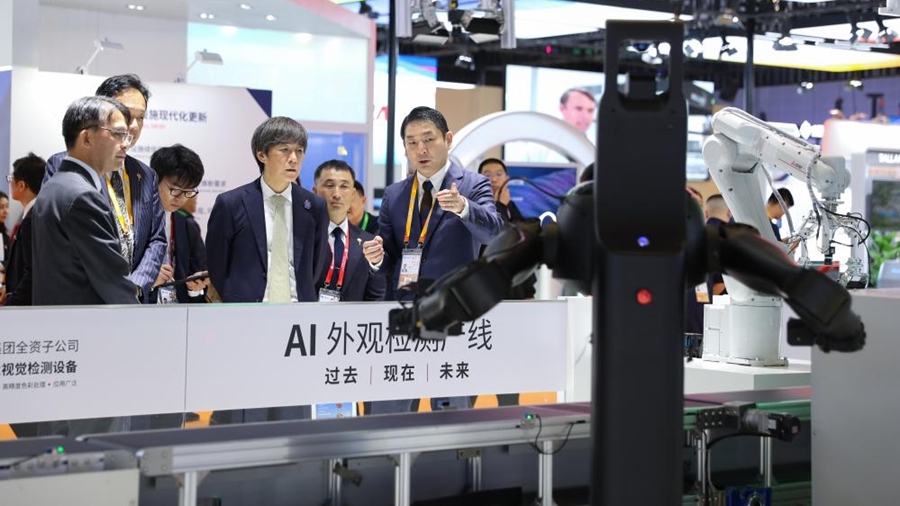
The China International Import Expo, or CIIE, is easy to describe in broad terms. It is large, high-profile, government-backed, and clearly relevant to international suppliers wanting access to China. For New Zealand and Australian businesses considering participation, though, the real commercial value depends on how it is used - and how it should be used depends on where the business sits in its China journey.
In practice, CIIE is not one kind of opportunity. It is a flexible platform that means something different depending on whether a business is still exploring the market, trying to establish a first route to entry, building on early commercial progress, or managing a more established presence.
The problem is not whether CIIE matters. It clearly does. The more useful question is how a business should use it depending on where it actually sits in its China journey.
This distinction matters because one of the easiest ways to get limited value from CIIE is to pursue the wrong objective for the wrong stage. The event may still generate conversations, but the conversations will often lack the commercial relevance, depth, or follow-through needed to move the business forward in a meaningful way.
For New Zealand businesses, this is especially important. China is too commercially important to approach casually, but also too demanding to treat as a single, uniform opportunity. CIIE can be useful across very different situations. What changes is not the event itself. What changes is the role the event should play.
The core mistake is treating CIIE as one kind of opportunity
A common way of talking about CIIE is to describe it as a gateway into China. That description is not wrong, but it is incomplete.
A gateway implies a single direction of travel. In reality, CIIE can serve very different functions. For one business, it may be a place to test whether buyer interest exists at all. For another, it may be a place to pressure-test a route to market already under discussion. For another, it may be a relationship management platform used to strengthen visibility, support existing partners, and open adjacent channels. For a more mature player, it may even function less as a lead-generation exercise and more as a market-positioning tool within an already active commercial footprint.
If these distinctions are ignored, CIIE tends to be overburdened. The event is expected to do too much. It is treated as a place to solve strategic uncertainty, generate new relationships, validate the product, produce sales, and create visibility all at once. That is usually when disappointment begins. Not because the event has failed, but because the business has not been clear enough about what kind of work the event is meant to do.
The most useful way to think about CIIE is therefore not as a standard opportunity, but as a flexible platform. Its value depends on whether the business uses it in a way that matches its actual stage of development in China.
At the earliest stage, CIIE is most useful as a market-reading tool
For businesses at a very early stage, the strongest temptation is often to treat CIIE as a market-entry shortcut. The logic is understandable. China is large, the event is visible, and buyers are concentrated in one place. It can feel as though attending should quickly answer the question of whether there is a real opportunity.
Sometimes it does provide strong signals. But those signals are most useful when they are read carefully.
At this stage, the real value of CIIE is usually not that it opens immediate commercial scale. It is that it helps the business observe how its offer lands in a China-facing environment. That sounds modest, but it is often one of the most commercially important things an early-stage exporter can learn.
A product that looks strong in New Zealand or other export markets does not automatically present clearly in China. Buyers may interpret the category differently. Price expectations may sit in another range. Packaging may signal something different from what the supplier intended. Claims that feel compelling at home may sound generic in a more crowded imported-goods environment. Distribution logic may also be more complex than expected. What initially looked like a broad China opportunity may turn out to be much narrower, more channel-specific, or more regionally differentiated.
This is why early-stage businesses tend to benefit most when they use CIIE as a disciplined learning environment. The purpose at this stage is not mainly to impress the market. It is to collect real commercial signals. Which types of buyers respond? What questions keep repeating? Where does confusion emerge? Which aspects of the product seem to matter most? Where does the product appear to fit naturally, and where does it not?
Businesses that arrive early in their China journey expecting immediate conversion often leave with an inflated sense of progress. They may have had many positive conversations, but little real clarity. Businesses that arrive expecting to learn where the opportunity is actually shaped often come away with something more valuable: a sharper view of how to enter the market more intelligently later.
At the entry stage, CIIE becomes a route-to-market tool
Once a New Zealand business has moved beyond broad exploration, the role of CIIE changes. At this stage, the company is no longer mainly trying to discover whether China is interesting. It is trying to work out how to enter in a way that is commercially realistic.
This is where CIIE begins to matter less as a signal-gathering platform and more as a route-to-market tool.
The key difference is that the business now needs to move from general opportunity to specific commercial structure. That means focusing less on overall interest and more on the kind of counterpart that can actually help build a viable entry path. A business at this stage is usually not helped much by talking to anyone who likes the product. It is helped by talking to the right category of importer, distributor, retail group, channel partner, or strategic intermediary.
The conversations also need to become more practical. It is no longer enough for a buyer to say the product is interesting. The business now needs to understand whether there is real fit around price positioning, margin expectations, target customer, channel role, packaging suitability, and operating model. This is where many businesses discover that getting interest and building entry structure are very different things.
A distributor may like the product but still not see enough room in the portfolio. A retailer may find the brand attractive but struggle to place it in a workable price band. An importer may appreciate the New Zealand story but still need stronger evidence of why the product would move faster than comparable alternatives.
At this stage, CIIE is most useful when it helps narrow the route rather than widen the field. The objective is not to collect more possibilities. It is to identify which path into China looks most commercially workable, and which paths should probably be ruled out early.
That is an important transition. For a business entering the market, discipline matters more than volume. More conversations do not necessarily mean more progress. In fact, too many loosely relevant conversations can delay real decision-making by keeping the company in exploratory mode longer than necessary.
At the development stage, CIIE becomes a momentum and channel-expansion platform
Once a business already has some presence in China, CIIE starts to serve a different role again. The company may already have a distributor, some channel traction, or a modest but functioning customer base. The challenge is no longer simple entry. The challenge is development.
At this stage, CIIE is often most useful as a momentum and channel-expansion platform.
This is because the business is now using the event from a position of partial reality rather than pure hypothesis. It already knows something about how the product performs, where interest sits, and what kind of counterpart matters. That allows the company to use the event more strategically.
For example, it may use CIIE to deepen existing relationships, meet current partners in person, support launches, or signal greater commitment to the market. It may also use the event to test expansion beyond its current route. A business selling through one type of distributor may explore whether specialty retail, e-commerce, regional distribution, or another channel layer could add growth. A company already known in one city cluster may use CIIE conversations to learn whether the product can travel to another part of the market with different commercial conditions.
This is a more sophisticated use of the event because the business is no longer asking whether it belongs in China at all. It is asking how to improve the quality, range, and resilience of its China presence.
The danger at this stage is a subtler one. Because some foothold already exists, the company may approach CIIE too passively. It attends because attending feels appropriate, but without a sharper growth question attached to the event. That often leads to pleasant but strategically light engagement. The event remains useful, but not as useful as it could have been.
At the development stage, the strongest users of CIIE usually come in with a more focused agenda. They know which commercial issue they want to push forward. That might be channel expansion, price repositioning, portfolio development, regional spread, partner reinforcement, or a more deliberate brand-building move. The event then becomes a place to accelerate a defined next chapter rather than simply maintain presence.
At the mature stage, CIIE is less about discovery and more about market management
For businesses with a more established China position, CIIE tends to move into yet another role. At this stage, the company may already have multiple relationships, real sales activity, broader market visibility, and a more complex China operating picture.
The event is no longer primarily about entering, and often not even mainly about growth in the simple sense. It becomes part of market management.
This may sound less exciting, but it is often where the event becomes strategically most nuanced.
An established business can use CIIE to maintain relevance in a market that changes quickly. Consumer preferences evolve. Competitive intensity shifts. Channel economics change. Partner expectations move. A mature exporter may need to use the event to reinforce strategic relationships, introduce new product directions, rebalance channel focus, or signal that it remains committed and active rather than static.
At this stage, visibility plays a different role. It is not mainly about being noticed for the first time. It is about staying legible, credible, and commercially current in a market that has many options. Mature businesses can also use CIIE as a listening mechanism, not because they do not know the market, but because they know enough to recognise that market conditions keep moving.
This is particularly relevant in China, where maturity is not the same as security. A company can have an established position and still lose relevance if it stops interpreting the market carefully. Used properly, CIIE gives such companies a concentrated moment to review how the market is shifting around them.
Different stages require different definitions of success
One reason businesses misjudge CIIE outcomes is that they use the same success criteria regardless of stage.
At an early stage, success may have little to do with immediate sales. It may mean leaving with a much clearer sense of category fit, buyer response, and where the product does or does not naturally belong. At the entry stage, success may mean identifying one or two commercially plausible route-to-market options and discarding several weaker ones. At the development stage, success may mean expanding the conversation into adjacent channels or strengthening existing partner momentum. At the mature stage, success may mean reinforcing strategic relationships, repositioning the offer, or gathering sharper market intelligence for the next phase.
If these distinctions are not made, businesses often judge the event badly. An early-stage company may feel disappointed because it did not generate enough concrete deals, even though it learned exactly what it needed to refine its China strategy. A mature business may overvalue booth activity while underestimating the strategic importance of a smaller number of high-level partner conversations.
The question is therefore not just how to use CIIE differently at different stages, but how to assess it differently at different stages.
That is a more mature way to think about the event. It recognises that the same platform can create very different forms of value, depending on what the business actually needs from China at that moment.
What New Zealand businesses often underestimate in this progression
New Zealand companies often enter China-related discussions with two strengths and one recurring risk.
The strengths are usually product credibility and country-of-origin trust. In many categories, these matter. They help open doors and support quality perception.
The risk is that these strengths can encourage a too-general China mindset. Because the market is large and the national story is strong, the company may feel that the opportunity is broad and that participation in CIIE should naturally deliver traction. That can blur the difference between stages.
A business still at the market-reading stage may behave as though it is ready for structured entry. A business still trying to establish its first reliable route may behave as though it is already in expansion mode. A company with some presence may keep using the event in an entry-stage way rather than leveraging it for more strategic development.
This is where sharper self-awareness matters. CIIE becomes much more useful when the company is honest about where it really stands. Not where it hopes to be, and not where it feels it ought to be, but where it actually is in commercial terms.
That honesty helps prevent one of the most common forms of waste in China-facing trade activity: using a serious platform for the wrong kind of work.
The deeper point: CIIE should match the stage, not compensate for it
The most useful principle for New Zealand businesses is a simple one. CIIE works best when it is used to support the stage the business is already in. It works much less well when it is expected to compensate for a stage the business has not yet reached.
An early-stage company cannot use the event to skip the need for market understanding. An entry-stage company cannot use the event to avoid making choices about route to market. A developing business cannot use the event to replace channel discipline. A mature business cannot use the event to hide from the need to keep adapting.
This is why some businesses appear to get far more value from CIIE than others, even when they are on the same exhibition floor. The difference is often not product quality alone, and not presentation alone. It is that they are using the platform in a way that matches the commercial problem they are actually trying to solve.
Takeaway
CIIE is not a single opportunity that means the same thing to every New Zealand business. Its role changes depending on whether the company is still reading the market, trying to enter, building momentum, or managing an established position.
The strongest use of the event comes from matching the objective to the stage. Early on, CIIE is most valuable as a market-reading tool. At entry stage, it helps narrow and test route-to-market options. During development, it supports momentum and channel expansion. At a more mature stage, it becomes part of broader market management and relationship maintenance.
In practical terms, the question is not simply whether to attend CIIE. It is what kind of work the business expects the event to do, and whether that work fits the stage the company is actually in.
When those two things are aligned, CIIE becomes much more than a visible exhibition. It becomes a more precise commercial instrument.
In practice, CIIE is not one kind of opportunity. It is a flexible platform that means something different depending on whether a business is still exploring the market, trying to establish a first route to entry, building on early commercial progress, or managing a more established presence.
The problem is not whether CIIE matters. It clearly does. The more useful question is how a business should use it depending on where it actually sits in its China journey.
This distinction matters because one of the easiest ways to get limited value from CIIE is to pursue the wrong objective for the wrong stage. The event may still generate conversations, but the conversations will often lack the commercial relevance, depth, or follow-through needed to move the business forward in a meaningful way.
For New Zealand businesses, this is especially important. China is too commercially important to approach casually, but also too demanding to treat as a single, uniform opportunity. CIIE can be useful across very different situations. What changes is not the event itself. What changes is the role the event should play.
The core mistake is treating CIIE as one kind of opportunity
A common way of talking about CIIE is to describe it as a gateway into China. That description is not wrong, but it is incomplete.
A gateway implies a single direction of travel. In reality, CIIE can serve very different functions. For one business, it may be a place to test whether buyer interest exists at all. For another, it may be a place to pressure-test a route to market already under discussion. For another, it may be a relationship management platform used to strengthen visibility, support existing partners, and open adjacent channels. For a more mature player, it may even function less as a lead-generation exercise and more as a market-positioning tool within an already active commercial footprint.
If these distinctions are ignored, CIIE tends to be overburdened. The event is expected to do too much. It is treated as a place to solve strategic uncertainty, generate new relationships, validate the product, produce sales, and create visibility all at once. That is usually when disappointment begins. Not because the event has failed, but because the business has not been clear enough about what kind of work the event is meant to do.
The most useful way to think about CIIE is therefore not as a standard opportunity, but as a flexible platform. Its value depends on whether the business uses it in a way that matches its actual stage of development in China.
At the earliest stage, CIIE is most useful as a market-reading tool
For businesses at a very early stage, the strongest temptation is often to treat CIIE as a market-entry shortcut. The logic is understandable. China is large, the event is visible, and buyers are concentrated in one place. It can feel as though attending should quickly answer the question of whether there is a real opportunity.
Sometimes it does provide strong signals. But those signals are most useful when they are read carefully.
At this stage, the real value of CIIE is usually not that it opens immediate commercial scale. It is that it helps the business observe how its offer lands in a China-facing environment. That sounds modest, but it is often one of the most commercially important things an early-stage exporter can learn.
A product that looks strong in New Zealand or other export markets does not automatically present clearly in China. Buyers may interpret the category differently. Price expectations may sit in another range. Packaging may signal something different from what the supplier intended. Claims that feel compelling at home may sound generic in a more crowded imported-goods environment. Distribution logic may also be more complex than expected. What initially looked like a broad China opportunity may turn out to be much narrower, more channel-specific, or more regionally differentiated.
This is why early-stage businesses tend to benefit most when they use CIIE as a disciplined learning environment. The purpose at this stage is not mainly to impress the market. It is to collect real commercial signals. Which types of buyers respond? What questions keep repeating? Where does confusion emerge? Which aspects of the product seem to matter most? Where does the product appear to fit naturally, and where does it not?
Businesses that arrive early in their China journey expecting immediate conversion often leave with an inflated sense of progress. They may have had many positive conversations, but little real clarity. Businesses that arrive expecting to learn where the opportunity is actually shaped often come away with something more valuable: a sharper view of how to enter the market more intelligently later.
At the entry stage, CIIE becomes a route-to-market tool
Once a New Zealand business has moved beyond broad exploration, the role of CIIE changes. At this stage, the company is no longer mainly trying to discover whether China is interesting. It is trying to work out how to enter in a way that is commercially realistic.
This is where CIIE begins to matter less as a signal-gathering platform and more as a route-to-market tool.
The key difference is that the business now needs to move from general opportunity to specific commercial structure. That means focusing less on overall interest and more on the kind of counterpart that can actually help build a viable entry path. A business at this stage is usually not helped much by talking to anyone who likes the product. It is helped by talking to the right category of importer, distributor, retail group, channel partner, or strategic intermediary.
The conversations also need to become more practical. It is no longer enough for a buyer to say the product is interesting. The business now needs to understand whether there is real fit around price positioning, margin expectations, target customer, channel role, packaging suitability, and operating model. This is where many businesses discover that getting interest and building entry structure are very different things.
A distributor may like the product but still not see enough room in the portfolio. A retailer may find the brand attractive but struggle to place it in a workable price band. An importer may appreciate the New Zealand story but still need stronger evidence of why the product would move faster than comparable alternatives.
At this stage, CIIE is most useful when it helps narrow the route rather than widen the field. The objective is not to collect more possibilities. It is to identify which path into China looks most commercially workable, and which paths should probably be ruled out early.
That is an important transition. For a business entering the market, discipline matters more than volume. More conversations do not necessarily mean more progress. In fact, too many loosely relevant conversations can delay real decision-making by keeping the company in exploratory mode longer than necessary.
At the development stage, CIIE becomes a momentum and channel-expansion platform
Once a business already has some presence in China, CIIE starts to serve a different role again. The company may already have a distributor, some channel traction, or a modest but functioning customer base. The challenge is no longer simple entry. The challenge is development.
At this stage, CIIE is often most useful as a momentum and channel-expansion platform.
This is because the business is now using the event from a position of partial reality rather than pure hypothesis. It already knows something about how the product performs, where interest sits, and what kind of counterpart matters. That allows the company to use the event more strategically.
For example, it may use CIIE to deepen existing relationships, meet current partners in person, support launches, or signal greater commitment to the market. It may also use the event to test expansion beyond its current route. A business selling through one type of distributor may explore whether specialty retail, e-commerce, regional distribution, or another channel layer could add growth. A company already known in one city cluster may use CIIE conversations to learn whether the product can travel to another part of the market with different commercial conditions.
This is a more sophisticated use of the event because the business is no longer asking whether it belongs in China at all. It is asking how to improve the quality, range, and resilience of its China presence.
The danger at this stage is a subtler one. Because some foothold already exists, the company may approach CIIE too passively. It attends because attending feels appropriate, but without a sharper growth question attached to the event. That often leads to pleasant but strategically light engagement. The event remains useful, but not as useful as it could have been.
At the development stage, the strongest users of CIIE usually come in with a more focused agenda. They know which commercial issue they want to push forward. That might be channel expansion, price repositioning, portfolio development, regional spread, partner reinforcement, or a more deliberate brand-building move. The event then becomes a place to accelerate a defined next chapter rather than simply maintain presence.
At the mature stage, CIIE is less about discovery and more about market management
For businesses with a more established China position, CIIE tends to move into yet another role. At this stage, the company may already have multiple relationships, real sales activity, broader market visibility, and a more complex China operating picture.
The event is no longer primarily about entering, and often not even mainly about growth in the simple sense. It becomes part of market management.
This may sound less exciting, but it is often where the event becomes strategically most nuanced.
An established business can use CIIE to maintain relevance in a market that changes quickly. Consumer preferences evolve. Competitive intensity shifts. Channel economics change. Partner expectations move. A mature exporter may need to use the event to reinforce strategic relationships, introduce new product directions, rebalance channel focus, or signal that it remains committed and active rather than static.
At this stage, visibility plays a different role. It is not mainly about being noticed for the first time. It is about staying legible, credible, and commercially current in a market that has many options. Mature businesses can also use CIIE as a listening mechanism, not because they do not know the market, but because they know enough to recognise that market conditions keep moving.
This is particularly relevant in China, where maturity is not the same as security. A company can have an established position and still lose relevance if it stops interpreting the market carefully. Used properly, CIIE gives such companies a concentrated moment to review how the market is shifting around them.
Different stages require different definitions of success
One reason businesses misjudge CIIE outcomes is that they use the same success criteria regardless of stage.
At an early stage, success may have little to do with immediate sales. It may mean leaving with a much clearer sense of category fit, buyer response, and where the product does or does not naturally belong. At the entry stage, success may mean identifying one or two commercially plausible route-to-market options and discarding several weaker ones. At the development stage, success may mean expanding the conversation into adjacent channels or strengthening existing partner momentum. At the mature stage, success may mean reinforcing strategic relationships, repositioning the offer, or gathering sharper market intelligence for the next phase.
If these distinctions are not made, businesses often judge the event badly. An early-stage company may feel disappointed because it did not generate enough concrete deals, even though it learned exactly what it needed to refine its China strategy. A mature business may overvalue booth activity while underestimating the strategic importance of a smaller number of high-level partner conversations.
The question is therefore not just how to use CIIE differently at different stages, but how to assess it differently at different stages.
That is a more mature way to think about the event. It recognises that the same platform can create very different forms of value, depending on what the business actually needs from China at that moment.
What New Zealand businesses often underestimate in this progression
New Zealand companies often enter China-related discussions with two strengths and one recurring risk.
The strengths are usually product credibility and country-of-origin trust. In many categories, these matter. They help open doors and support quality perception.
The risk is that these strengths can encourage a too-general China mindset. Because the market is large and the national story is strong, the company may feel that the opportunity is broad and that participation in CIIE should naturally deliver traction. That can blur the difference between stages.
A business still at the market-reading stage may behave as though it is ready for structured entry. A business still trying to establish its first reliable route may behave as though it is already in expansion mode. A company with some presence may keep using the event in an entry-stage way rather than leveraging it for more strategic development.
This is where sharper self-awareness matters. CIIE becomes much more useful when the company is honest about where it really stands. Not where it hopes to be, and not where it feels it ought to be, but where it actually is in commercial terms.
That honesty helps prevent one of the most common forms of waste in China-facing trade activity: using a serious platform for the wrong kind of work.
The deeper point: CIIE should match the stage, not compensate for it
The most useful principle for New Zealand businesses is a simple one. CIIE works best when it is used to support the stage the business is already in. It works much less well when it is expected to compensate for a stage the business has not yet reached.
An early-stage company cannot use the event to skip the need for market understanding. An entry-stage company cannot use the event to avoid making choices about route to market. A developing business cannot use the event to replace channel discipline. A mature business cannot use the event to hide from the need to keep adapting.
This is why some businesses appear to get far more value from CIIE than others, even when they are on the same exhibition floor. The difference is often not product quality alone, and not presentation alone. It is that they are using the platform in a way that matches the commercial problem they are actually trying to solve.
Takeaway
CIIE is not a single opportunity that means the same thing to every New Zealand business. Its role changes depending on whether the company is still reading the market, trying to enter, building momentum, or managing an established position.
The strongest use of the event comes from matching the objective to the stage. Early on, CIIE is most valuable as a market-reading tool. At entry stage, it helps narrow and test route-to-market options. During development, it supports momentum and channel expansion. At a more mature stage, it becomes part of broader market management and relationship maintenance.
In practical terms, the question is not simply whether to attend CIIE. It is what kind of work the business expects the event to do, and whether that work fits the stage the company is actually in.
When those two things are aligned, CIIE becomes much more than a visible exhibition. It becomes a more precise commercial instrument.
