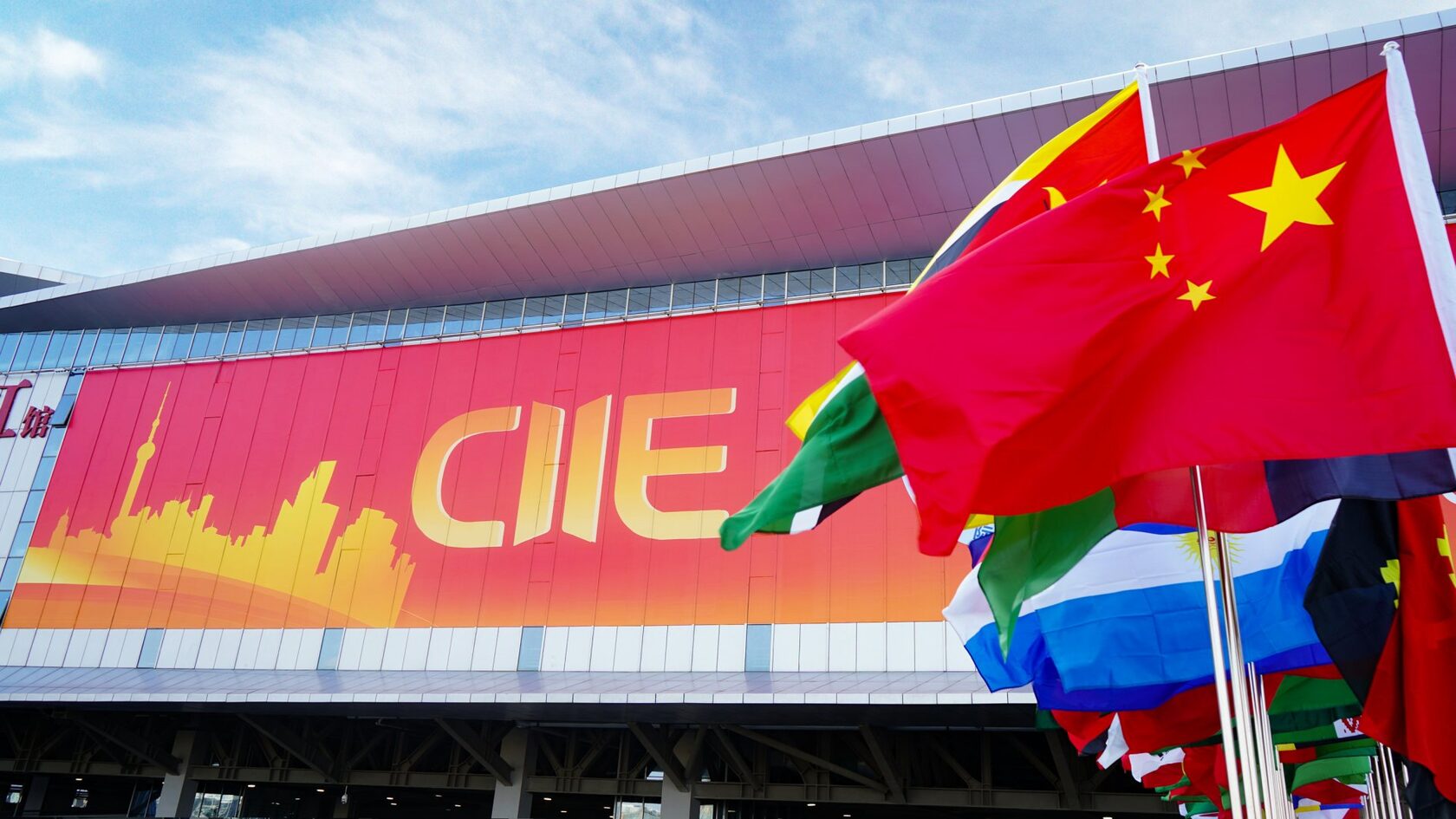
For New Zealand and Australian businesses that have decided to attend the China International Import Expo, or CIIE, the most common preparation mistake is not in what gets done - it is in when things get done.
CIIE runs in November each year in Shanghai. Applications for international exhibitors typically open up to twelve months before the event. The practical preparation window - the period during which the most important decisions need to be made - often begins eight to ten months out, well before CIIE appears on most commercial calendars. By the time the event receives broader public attention, many of the useful preparation steps are already late.
This article maps a working preparation timeline for CIIE. Not the ideal timeline, but a realistic one that accounts for the lead times, approvals, and coordination steps that exhibitors from New Zealand and Australia typically encounter.
Ten to twelve months before CIIE
This is the strategic window. The decisions made at this stage will shape the commercial usefulness of the event.
The primary question to resolve is whether CIIE is the right event for this stage of the business's China strategy. An honest answer is worth more than months of preparation based on the wrong assumption. The article "Before committing to CIIE: a practical self-check for New Zealand and Australian businesses" covers this in detail, but in brief: the most important variables are whether the business has a clear objective for the event, whether the product is sufficiently prepared for a China-facing buyer conversation, and whether the business has internal capacity to follow through after the event.
If the decision to attend is confirmed, the next steps involve registration and application. For New Zealand businesses, this typically means engagement through NZTE, which manages the New Zealand pavilion programme. For Australian businesses, engagement through Austrade provides access to comparable coordination. Country pavilion allocations, shared booth arrangements, and independent exhibit spaces all have different timelines and cost structures.
Seven to nine months before CIIE
This window is for commercial preparation. The key tasks include:
Product readiness review. Is the product compliant with Chinese labelling and importation requirements? For food and health products, this typically involves Chinese-language labelling, GACC registration where required, and confirmation that packaging meets relevant GB standards. These steps take time and often require iteration.
Channel and buyer targeting. Who specifically is the business trying to meet at CIIE? A distributor in a particular product category? A retailer active in a specific region? A buyer aligned to a particular channel? Without a defined buyer profile, CIIE preparation risks being broad and therefore commercially weak. This is the stage to build a target list and begin outreach where possible.
Buyer-facing materials preparation. This includes product sheets, commercial decks, and any supporting documentation in Chinese. The goal is not to translate existing English materials but to prepare materials that answer the commercial questions a Chinese buyer is likely to ask. This takes longer than most businesses expect.
Four to six months before CIIE
This is the operational and logistics window.
Booth planning and design. Booth specifications, display requirements, and any promotional elements need to be finalised within the timelines set by CIIE's official organisers and logistics service providers. Both NZTE and Austrade provide coordination support for participating businesses within their respective pavilions.
Product shipment planning. For businesses shipping physical products for exhibition, lead times need to account for customs clearance, consolidation, and inspection requirements. Products for exhibition at CIIE are subject to Chinese customs procedures and, for food products, inspection requirements. Late-arriving samples are a common and avoidable problem.
Interpreter and support arrangements. If the business does not have Mandarin-capable team members attending, interpreter arrangements should be confirmed well in advance. Good interpreters with commercial experience in the relevant category are in high demand during the CIIE period.
Two to three months before CIIE
This is the meeting preparation window.
Pre-event outreach. For businesses aiming to secure pre-arranged meetings rather than relying on floor traffic, outreach to prospective buyers should begin at this stage. CIIE's own matchmaking system and the coordination provided by NZTE and Austrade can facilitate introductions, but pre-event communication with high-priority targets is typically more effective than waiting to initiate contact on the floor.
Internal briefing and team alignment. Every team member attending needs to understand the event objective, the target buyer profile, and the commercial message. Inconsistent messaging across team members at an exhibition is more common than it sounds, and it weakens the impression the business makes.
Post-event follow-up preparation. This is the step most commonly left until after the event, at which point momentum has already started to decay. The follow-up framework - including who owns which category of contact, what materials will be sent, and within what timeframe - should be agreed before CIIE begins. The first week after the event is when most early commercial momentum is either converted or lost.
One month before CIIE
At this stage, the main preparation should be substantially complete. The tasks in this window are confirmatory and operational: logistics finalised, materials printed, team briefed, meeting schedule as complete as possible, and post-event response capacity confirmed.
The final question to ask at this stage is whether the business is arriving at CIIE with a clear commercial objective, prepared materials, targeted meeting intentions, and a plan for what happens after the event. If those four elements are in place, the preparation has done its job.
After CIIE
Post-exhibition follow-up is treated in detail in the article "After the exhibition: how to turn first conversations into useful next steps." In brief: the period immediately after CIIE is when commercial momentum is most fragile. Responsive, structured, and commercially specific follow-up in the week following the event significantly improves the likelihood of first conversations becoming concrete next steps.
Budgeting and internal alignment in the ten to twelve month window
Managing the CIIE preparation timeline effectively requires a clear budget from the outset. The full cost of participation - not just the booth space or country pavilion fee - is considerably higher than most businesses budget when they first investigate the event.
A useful approach is to separate costs into four categories: participation costs (booth space, shared pavilion fees, or independent exhibitor registration); preparation costs (compliance review and labelling, materials development, translation, booth design and freight); event operational costs (travel, accommodation, interpreter fees, and team time across the preparation and event period); and follow-up costs (the internal and external resource required to convert exhibition contacts into commercial outcomes in the three months after the event). Most businesses account for the first category and significantly underestimate the other three, which in aggregate are typically higher.
For businesses new to CIIE, a conservative ROI planning approach involves defining a minimum outcome - the commercial result that would make the investment worthwhile - and working backwards to assess the realistic probability of achieving it at this stage. If the minimum outcome is a first distributor agreement, what would that agreement need to generate to return the investment? If the minimum outcome is a set of qualified buyer contacts, how many at what quality level does the business realistically expect to generate? This framing creates a commercial basis for the decision rather than relying on general optimism about the event's scale.
Internal alignment at this stage is also worth investing in. Decision-makers who have approved the CIIE investment need to understand what success looks like, what the realistic preparation requirements are, and what follow-through capacity will be needed after the event. A business that arrives at CIIE with the right team but without internal alignment on expectations and follow-up authority is likely to generate leads that stall during the post-event conversion process.
Deeper preparation in the seven to nine month window: compliance in detail
The compliance preparation window is typically the most technically demanding of the preparation phases. For NZ and AU businesses in food, health products, or personal care categories, this is where the gap between commercial readiness and regulatory readiness most often becomes visible.
Chinese label requirements need a full review at this stage, not a finalisation. For food products, the mandatory elements under GB 7718 include: the product name, ingredient list in descending order by weight, net content, name and address of the manufacturer and the Chinese importer or agent, country of origin, shelf life, storage conditions, and the food safety standard or registration number. The label must be in Chinese characters and must meet the standard's font size and readability requirements. Sticker overlabelling of existing foreign-language packaging is permitted but the sticker must be durable, legible, and cover all required elements.
Health and functional claims require particular attention. The distinction in Chinese regulation between what can be stated on a general food product versus what requires approval as a health food (baojian shipin) or special dietary food is product-specific and enforced. Claims that are commercially normal in NZ or AU - "immunity support," "gut health," "superfood" - may be restricted or require specific regulatory approval in China. Discovering this at the border is expensive. Discovering it at the compliance review stage allows the adjustment before the product is shipped.
GACC registration status for the production facility should be confirmed now, not assumed. Facilities that have changed production lines, ownership, or address details since their last registration may need to update before the export. MPI (NZ) and DAFF (AU) can advise on current status.
Buyer targeting methodology: how to prepare a genuine meeting list
The buyer targeting work done in the seven to nine month window directly shapes the commercial value of CIIE. A business that arrives with a generic presence and no targeted meeting list will meet buyers who happen to find them. A business that has identified specific buyer organisations, made initial contact, and pre-arranged focused meetings will have a fundamentally different commercial experience.
A useful targeting methodology involves three steps. First, define the buyer profile precisely: not "food importers" but "importers and distributors with active portfolios in premium imported dairy or functional health food, with coverage of Tier 1 and major Tier 2 cities, and existing relationships with premium supermarket or pharmacy chains." The more specific the profile, the easier it is to identify relevant targets and the more commercially productive the conversations will be.
Second, identify organisations and individuals that match the profile. NZTE's China team can provide leads and introductions for NZ businesses; Austrade performs the equivalent function for Australian businesses. The CIIE matchmaking system supports pre-event buyer identification. Previous CIIE exhibitors and exporters with event experience are also useful informal sources of buyer intelligence.
Third, initiate contact before the event. A buyer who has received a brief product introduction and agreed to a meeting in advance is in a fundamentally different commercial position than one who encounters the product for the first time on the floor. Pre-event outreach does not need to be elaborate - a short Chinese-language introduction email referencing the CIIE participation and proposing a specific meeting time is often sufficient to secure a pre-arranged conversation that would otherwise depend on chance.
Booth design and logistics in the four to six month window
Booth design for CIIE in a Chinese context has some specific considerations that differ from trade event preparation for other markets. Chinese buyers at major trade events are comparing multiple international suppliers across a concentrated period. A booth that is visually clear, spatially comfortable for a standing conversation, and organised so that key products and commercial information are immediately apparent without requiring explanation performs better than one that is elaborate but hard to navigate quickly.
Product sampling is a powerful engagement tool at CIIE, particularly for food and beverage categories. Buyers remember and associate positive sensory experiences with commercial impressions. Sampling arrangements need to comply with CIIE's specific guidelines for food display and sampling at the event - the official CIIE logistics provider can advise on these requirements.
For businesses shipping physical products for exhibition, logistics need to account for Chinese customs requirements. Products for exhibition at CIIE are subject to customs inspection, and food samples must meet import requirements. Exporters who ship samples as general freight without proper documentation frequently have materials delayed or held. The CIIE organiser's official logistics partner provides the correct shipping documentation guidance for each category, and this guidance is worth obtaining well before the shipping window.
Pre-event outreach and internal briefing in the two to three month window
Pre-event outreach to prospective buyers should begin no later than eight to ten weeks before the event. The goal is to convert the best targets on the meeting list from "we have sent an introduction" to "we have a confirmed meeting on day one or two." CIIE's matchmaking system and the coordination provided by NZTE and Austrade both facilitate introductions, but proactive direct communication with high-priority targets in advance of the event produces better-quality pre-arranged meetings than waiting for the platform to make introductions.
Internal team briefing at this stage needs to go beyond logistics. Every team member attending CIIE needs to understand: the specific commercial objective for the event; the profile of the buyers they are most likely to meet and what those buyers care about; the commercial message - what the product is, where it fits, what the price range is, what the next step should be; and the follow-up process that will apply after the event. Inconsistent messaging between team members at an exhibition is more common than it sounds, and it creates an impression of commercial unreadiness that informed buyers notice.
Post-event follow-up planning should be completed before the team departs for Shanghai, not assembled after returning. The first week after CIIE is when commercial momentum is most fragile and most valuable. A business that has agreed in advance on who handles which category of contact, what the first follow-up message contains, when samples and pricing will be sent, and who approves commercial discussions will consistently outperform one that improvises the follow-up process after returning home.
What to do each day on the ground
On the ground, the priority structure across the six days is clear. Day one demands the team's best commercial energy and prepared focus - it is when the most senior and most intentional buyers are most active, and when pre-arranged meetings with the highest-priority contacts should be concentrated. The booth needs to be fully functional and the team fully briefed the day before doors open.
Days two and three are for following up on day-one conversations within the exhibition itself - re-engaging contacts who expressed interest but did not commit to a next step, and broadening the contact base with walk-in buyers in the relevant zones.
At the end of each day, the team should review collectively: who was met, what they expressed interest in, what level of commercial seriousness they showed, and what specific follow-up action is required. Contact notes written during or immediately after conversations are significantly more useful for post-event follow-up than trying to reconstruct content from business cards and memory a week after returning.
Common preparation mistakes to avoid across the full timeline
At the ten to twelve month stage, the most common mistake is treating the participation decision as reversible until much later than it actually is. Once CIIE participation is confirmed through NZTE or Austrade, the cost of withdrawing increases quickly. Beginning preparation immediately after confirmation saves significant time and cost.
At the seven to nine month stage, the most common mistake is delegating compliance entirely to a distributor or importer without verifying that the approach is current and correct. If labelling is non-compliant, the product cannot enter the Chinese market - and the distributor, who is also waiting for the stock, has limited power to fix a problem that originated in the exporter's packaging decisions.
At the four to six month stage, the most consistent mistake is underestimating booth logistics lead times and customs requirements for exhibition samples. Late-arriving samples are a common and avoidable problem at CIIE.
At the two to three month stage, the mistake is leaving follow-up planning until after the event. The businesses that convert CIIE contacts most effectively are those that arrive with the follow-up structure already agreed - not those that start planning it on the flight home.
CIIE runs in November each year in Shanghai. Applications for international exhibitors typically open up to twelve months before the event. The practical preparation window - the period during which the most important decisions need to be made - often begins eight to ten months out, well before CIIE appears on most commercial calendars. By the time the event receives broader public attention, many of the useful preparation steps are already late.
This article maps a working preparation timeline for CIIE. Not the ideal timeline, but a realistic one that accounts for the lead times, approvals, and coordination steps that exhibitors from New Zealand and Australia typically encounter.
Ten to twelve months before CIIE
This is the strategic window. The decisions made at this stage will shape the commercial usefulness of the event.
The primary question to resolve is whether CIIE is the right event for this stage of the business's China strategy. An honest answer is worth more than months of preparation based on the wrong assumption. The article "Before committing to CIIE: a practical self-check for New Zealand and Australian businesses" covers this in detail, but in brief: the most important variables are whether the business has a clear objective for the event, whether the product is sufficiently prepared for a China-facing buyer conversation, and whether the business has internal capacity to follow through after the event.
If the decision to attend is confirmed, the next steps involve registration and application. For New Zealand businesses, this typically means engagement through NZTE, which manages the New Zealand pavilion programme. For Australian businesses, engagement through Austrade provides access to comparable coordination. Country pavilion allocations, shared booth arrangements, and independent exhibit spaces all have different timelines and cost structures.
Seven to nine months before CIIE
This window is for commercial preparation. The key tasks include:
Product readiness review. Is the product compliant with Chinese labelling and importation requirements? For food and health products, this typically involves Chinese-language labelling, GACC registration where required, and confirmation that packaging meets relevant GB standards. These steps take time and often require iteration.
Channel and buyer targeting. Who specifically is the business trying to meet at CIIE? A distributor in a particular product category? A retailer active in a specific region? A buyer aligned to a particular channel? Without a defined buyer profile, CIIE preparation risks being broad and therefore commercially weak. This is the stage to build a target list and begin outreach where possible.
Buyer-facing materials preparation. This includes product sheets, commercial decks, and any supporting documentation in Chinese. The goal is not to translate existing English materials but to prepare materials that answer the commercial questions a Chinese buyer is likely to ask. This takes longer than most businesses expect.
Four to six months before CIIE
This is the operational and logistics window.
Booth planning and design. Booth specifications, display requirements, and any promotional elements need to be finalised within the timelines set by CIIE's official organisers and logistics service providers. Both NZTE and Austrade provide coordination support for participating businesses within their respective pavilions.
Product shipment planning. For businesses shipping physical products for exhibition, lead times need to account for customs clearance, consolidation, and inspection requirements. Products for exhibition at CIIE are subject to Chinese customs procedures and, for food products, inspection requirements. Late-arriving samples are a common and avoidable problem.
Interpreter and support arrangements. If the business does not have Mandarin-capable team members attending, interpreter arrangements should be confirmed well in advance. Good interpreters with commercial experience in the relevant category are in high demand during the CIIE period.
Two to three months before CIIE
This is the meeting preparation window.
Pre-event outreach. For businesses aiming to secure pre-arranged meetings rather than relying on floor traffic, outreach to prospective buyers should begin at this stage. CIIE's own matchmaking system and the coordination provided by NZTE and Austrade can facilitate introductions, but pre-event communication with high-priority targets is typically more effective than waiting to initiate contact on the floor.
Internal briefing and team alignment. Every team member attending needs to understand the event objective, the target buyer profile, and the commercial message. Inconsistent messaging across team members at an exhibition is more common than it sounds, and it weakens the impression the business makes.
Post-event follow-up preparation. This is the step most commonly left until after the event, at which point momentum has already started to decay. The follow-up framework - including who owns which category of contact, what materials will be sent, and within what timeframe - should be agreed before CIIE begins. The first week after the event is when most early commercial momentum is either converted or lost.
One month before CIIE
At this stage, the main preparation should be substantially complete. The tasks in this window are confirmatory and operational: logistics finalised, materials printed, team briefed, meeting schedule as complete as possible, and post-event response capacity confirmed.
The final question to ask at this stage is whether the business is arriving at CIIE with a clear commercial objective, prepared materials, targeted meeting intentions, and a plan for what happens after the event. If those four elements are in place, the preparation has done its job.
After CIIE
Post-exhibition follow-up is treated in detail in the article "After the exhibition: how to turn first conversations into useful next steps." In brief: the period immediately after CIIE is when commercial momentum is most fragile. Responsive, structured, and commercially specific follow-up in the week following the event significantly improves the likelihood of first conversations becoming concrete next steps.
Budgeting and internal alignment in the ten to twelve month window
Managing the CIIE preparation timeline effectively requires a clear budget from the outset. The full cost of participation - not just the booth space or country pavilion fee - is considerably higher than most businesses budget when they first investigate the event.
A useful approach is to separate costs into four categories: participation costs (booth space, shared pavilion fees, or independent exhibitor registration); preparation costs (compliance review and labelling, materials development, translation, booth design and freight); event operational costs (travel, accommodation, interpreter fees, and team time across the preparation and event period); and follow-up costs (the internal and external resource required to convert exhibition contacts into commercial outcomes in the three months after the event). Most businesses account for the first category and significantly underestimate the other three, which in aggregate are typically higher.
For businesses new to CIIE, a conservative ROI planning approach involves defining a minimum outcome - the commercial result that would make the investment worthwhile - and working backwards to assess the realistic probability of achieving it at this stage. If the minimum outcome is a first distributor agreement, what would that agreement need to generate to return the investment? If the minimum outcome is a set of qualified buyer contacts, how many at what quality level does the business realistically expect to generate? This framing creates a commercial basis for the decision rather than relying on general optimism about the event's scale.
Internal alignment at this stage is also worth investing in. Decision-makers who have approved the CIIE investment need to understand what success looks like, what the realistic preparation requirements are, and what follow-through capacity will be needed after the event. A business that arrives at CIIE with the right team but without internal alignment on expectations and follow-up authority is likely to generate leads that stall during the post-event conversion process.
Deeper preparation in the seven to nine month window: compliance in detail
The compliance preparation window is typically the most technically demanding of the preparation phases. For NZ and AU businesses in food, health products, or personal care categories, this is where the gap between commercial readiness and regulatory readiness most often becomes visible.
Chinese label requirements need a full review at this stage, not a finalisation. For food products, the mandatory elements under GB 7718 include: the product name, ingredient list in descending order by weight, net content, name and address of the manufacturer and the Chinese importer or agent, country of origin, shelf life, storage conditions, and the food safety standard or registration number. The label must be in Chinese characters and must meet the standard's font size and readability requirements. Sticker overlabelling of existing foreign-language packaging is permitted but the sticker must be durable, legible, and cover all required elements.
Health and functional claims require particular attention. The distinction in Chinese regulation between what can be stated on a general food product versus what requires approval as a health food (baojian shipin) or special dietary food is product-specific and enforced. Claims that are commercially normal in NZ or AU - "immunity support," "gut health," "superfood" - may be restricted or require specific regulatory approval in China. Discovering this at the border is expensive. Discovering it at the compliance review stage allows the adjustment before the product is shipped.
GACC registration status for the production facility should be confirmed now, not assumed. Facilities that have changed production lines, ownership, or address details since their last registration may need to update before the export. MPI (NZ) and DAFF (AU) can advise on current status.
Buyer targeting methodology: how to prepare a genuine meeting list
The buyer targeting work done in the seven to nine month window directly shapes the commercial value of CIIE. A business that arrives with a generic presence and no targeted meeting list will meet buyers who happen to find them. A business that has identified specific buyer organisations, made initial contact, and pre-arranged focused meetings will have a fundamentally different commercial experience.
A useful targeting methodology involves three steps. First, define the buyer profile precisely: not "food importers" but "importers and distributors with active portfolios in premium imported dairy or functional health food, with coverage of Tier 1 and major Tier 2 cities, and existing relationships with premium supermarket or pharmacy chains." The more specific the profile, the easier it is to identify relevant targets and the more commercially productive the conversations will be.
Second, identify organisations and individuals that match the profile. NZTE's China team can provide leads and introductions for NZ businesses; Austrade performs the equivalent function for Australian businesses. The CIIE matchmaking system supports pre-event buyer identification. Previous CIIE exhibitors and exporters with event experience are also useful informal sources of buyer intelligence.
Third, initiate contact before the event. A buyer who has received a brief product introduction and agreed to a meeting in advance is in a fundamentally different commercial position than one who encounters the product for the first time on the floor. Pre-event outreach does not need to be elaborate - a short Chinese-language introduction email referencing the CIIE participation and proposing a specific meeting time is often sufficient to secure a pre-arranged conversation that would otherwise depend on chance.
Booth design and logistics in the four to six month window
Booth design for CIIE in a Chinese context has some specific considerations that differ from trade event preparation for other markets. Chinese buyers at major trade events are comparing multiple international suppliers across a concentrated period. A booth that is visually clear, spatially comfortable for a standing conversation, and organised so that key products and commercial information are immediately apparent without requiring explanation performs better than one that is elaborate but hard to navigate quickly.
Product sampling is a powerful engagement tool at CIIE, particularly for food and beverage categories. Buyers remember and associate positive sensory experiences with commercial impressions. Sampling arrangements need to comply with CIIE's specific guidelines for food display and sampling at the event - the official CIIE logistics provider can advise on these requirements.
For businesses shipping physical products for exhibition, logistics need to account for Chinese customs requirements. Products for exhibition at CIIE are subject to customs inspection, and food samples must meet import requirements. Exporters who ship samples as general freight without proper documentation frequently have materials delayed or held. The CIIE organiser's official logistics partner provides the correct shipping documentation guidance for each category, and this guidance is worth obtaining well before the shipping window.
Pre-event outreach and internal briefing in the two to three month window
Pre-event outreach to prospective buyers should begin no later than eight to ten weeks before the event. The goal is to convert the best targets on the meeting list from "we have sent an introduction" to "we have a confirmed meeting on day one or two." CIIE's matchmaking system and the coordination provided by NZTE and Austrade both facilitate introductions, but proactive direct communication with high-priority targets in advance of the event produces better-quality pre-arranged meetings than waiting for the platform to make introductions.
Internal team briefing at this stage needs to go beyond logistics. Every team member attending CIIE needs to understand: the specific commercial objective for the event; the profile of the buyers they are most likely to meet and what those buyers care about; the commercial message - what the product is, where it fits, what the price range is, what the next step should be; and the follow-up process that will apply after the event. Inconsistent messaging between team members at an exhibition is more common than it sounds, and it creates an impression of commercial unreadiness that informed buyers notice.
Post-event follow-up planning should be completed before the team departs for Shanghai, not assembled after returning. The first week after CIIE is when commercial momentum is most fragile and most valuable. A business that has agreed in advance on who handles which category of contact, what the first follow-up message contains, when samples and pricing will be sent, and who approves commercial discussions will consistently outperform one that improvises the follow-up process after returning home.
What to do each day on the ground
On the ground, the priority structure across the six days is clear. Day one demands the team's best commercial energy and prepared focus - it is when the most senior and most intentional buyers are most active, and when pre-arranged meetings with the highest-priority contacts should be concentrated. The booth needs to be fully functional and the team fully briefed the day before doors open.
Days two and three are for following up on day-one conversations within the exhibition itself - re-engaging contacts who expressed interest but did not commit to a next step, and broadening the contact base with walk-in buyers in the relevant zones.
At the end of each day, the team should review collectively: who was met, what they expressed interest in, what level of commercial seriousness they showed, and what specific follow-up action is required. Contact notes written during or immediately after conversations are significantly more useful for post-event follow-up than trying to reconstruct content from business cards and memory a week after returning.
Common preparation mistakes to avoid across the full timeline
At the ten to twelve month stage, the most common mistake is treating the participation decision as reversible until much later than it actually is. Once CIIE participation is confirmed through NZTE or Austrade, the cost of withdrawing increases quickly. Beginning preparation immediately after confirmation saves significant time and cost.
At the seven to nine month stage, the most common mistake is delegating compliance entirely to a distributor or importer without verifying that the approach is current and correct. If labelling is non-compliant, the product cannot enter the Chinese market - and the distributor, who is also waiting for the stock, has limited power to fix a problem that originated in the exporter's packaging decisions.
At the four to six month stage, the most consistent mistake is underestimating booth logistics lead times and customs requirements for exhibition samples. Late-arriving samples are a common and avoidable problem at CIIE.
At the two to three month stage, the mistake is leaving follow-up planning until after the event. The businesses that convert CIIE contacts most effectively are those that arrive with the follow-up structure already agreed - not those that start planning it on the flight home.
