A large market and a free trade agreement can create opportunity. They do not automatically make a trade expo the right move for every company.
That is why the question of whether to go to the China International Import Expo, or CIIE, deserves a serious answer rather than an automatic yes. For New Zealand and Australian businesses, China is not a peripheral market. New Zealand exports to China totalled NZ$22.82 billion in the year ending September 2024, including NZ$19.77 billion in goods and NZ$3.05 billion in services. Australia's trading relationship with China under ChAFTA is similarly substantial. Dairy, meat, forestry and fruit remain the main goods exports, which means many of New Zealand’s strongest export sectors are already tied closely to China’s demand.
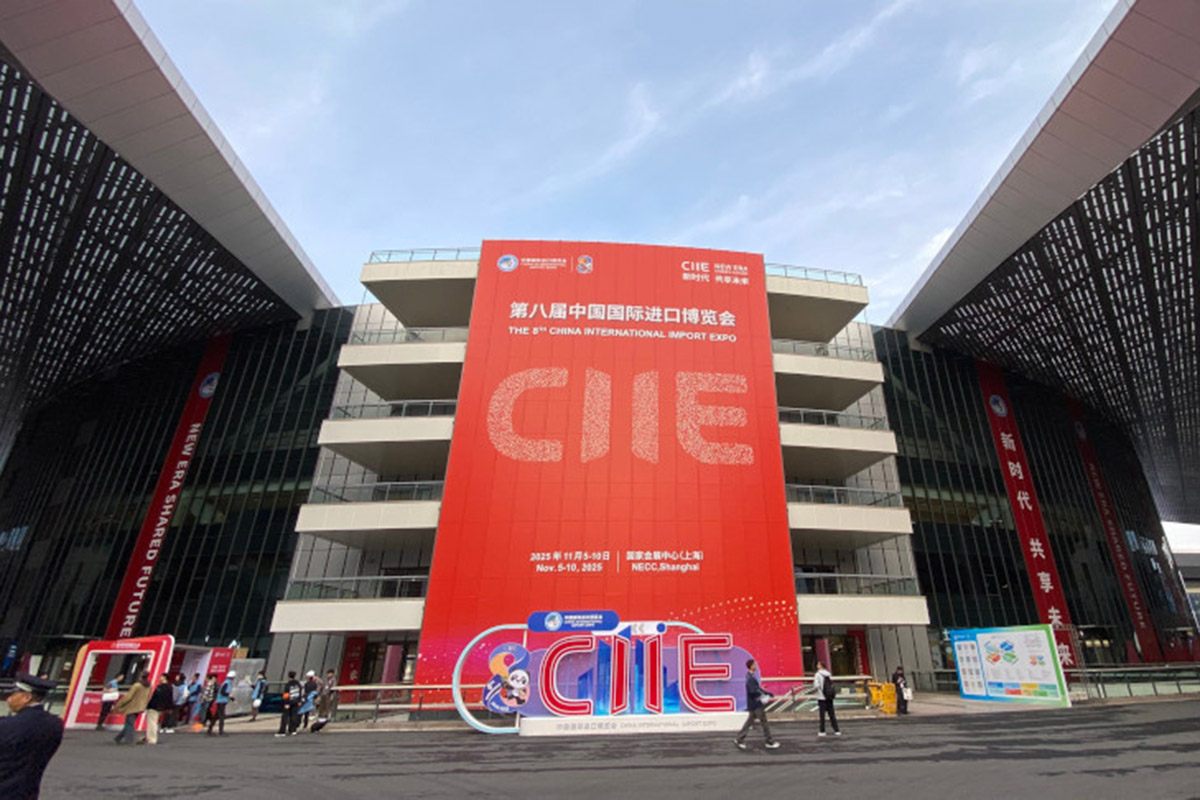
CIIE sits inside that larger trade relationship. It is not just another industry fair. It was created as a national-level import platform, and it is positioned by China as a place where overseas businesses can meet buyers, launch products, and deepen commercial relationships. Official CIIE materials say that by the end of the 2025 edition, cumulative registered visitors had exceeded 3.3 million person-times, the 8th edition drew more than 460,000 registered visitors, and intended annual transaction value reached US$83.49 billion. The same official materials also describe a year-round matchmaking system rather than a one-off exhibition week. That gives some sense of why the event gets attention from governments, large corporates, and exporters alike.
For New Zealand companies, there is also a practical reason this question keeps coming back. NZTE has continued to expand the country’s presence at the event. In 2024, NZTE said 58 New Zealand businesses were exhibiting, the highest number since CIIE began in 2018. In 2025, NZTE said more than 80 New Zealand businesses took part, with a 1,000 square metre Taste New Zealand Pavilion housing 38 exhibitors. It also reported more than 20 commercial signings and projected new trade value of up to NZ$450 million over the following 12 months. Those figures do not prove that every exhibitor did well. But they do show that New Zealand businesses are not entering CIIE without precedent, support, or visible commercial intent.
That is the first reason CIIE can make sense. It offers concentrated access to a market that is otherwise expensive and slow to navigate. A New Zealand company trying to build China relationships city by city would normally need repeated travel, introductions, local coordination, and time. CIIE compresses some of that work into a few days. NZTE’s own description of the 2024 event was telling. It did not frame CIIE mainly as a symbolic showcase. It said exporters were using it to connect with local partners, launch products, and build brand awareness. In 2025, NZTE again highlighted signings, launches, and partnership activity rather than just foot traffic. That suggests the event is most useful when it helps move something already in progress.
This is an important distinction, because CIIE is easy to overestimate. Its scale, government backing, and media profile can create the impression that showing up is itself a market-entry strategy. It is not. The event can provide visibility, meetings, and momentum. It cannot decide which channel is right for the business, whether the product is appropriately positioned, whether pricing makes sense, or whether the company is actually ready to respond once interest appears. Businesses sometimes expect the event to answer questions they have not yet answered internally. That is often where disappointment begins. The problem is not usually that CIIE is weak. It is that the company has asked the event to do too much.
This matters especially for New Zealand firms because the existence of the New Zealand-China Free Trade Agreement can sometimes create a false sense of readiness. The agreement is valuable. It reduces friction and improves market access conditions. But it does not remove the need for commercial discipline. A buyer in China still wants a clear offer, competitive pricing, convincing product presentation, dependable supply, and fast follow-up. Tariff advantages do not compensate for weak buyer materials, unclear brand positioning, or slow response times. In business terms, the free trade agreement can improve the route, but it does not drive the vehicle.
Another reality that New Zealand businesses often underestimate is that access is not the same as alignment. CIIE may put a company in front of distributors, retailers, e-commerce operators, and institutional buyers, but that does not mean these meetings are immediately useful. Many conversations at major China exhibitions are exploratory. Buyers are comparing products, testing price ranges, looking for leverage with existing suppliers, or collecting information for later. A business that leaves with a long contact list may still have made little actual progress. What matters is whether those contacts fit the company’s route to market, and whether someone inside the business is prepared to qualify, prioritise, and follow up properly afterwards.
That is one reason the official CIIE matchmaking numbers should be read carefully. CIIE says its trade and investment matchmaking conferences across the first seven editions served more than 30,000 enterprises, completed more than 10,000 rounds of online and offline matchmaking, and generated about 5,300 cooperation intentions worth over US$50 billion. Those are significant numbers, but they also underline the point that CIIE is built around facilitated introductions and commercial intent, not guaranteed conversion. A cooperation intention is not the same thing as signed, delivered, repeat business. For exporters, that is a useful reminder to stay commercially grounded.
There is also a practical execution issue. CIIE may look like a branding event from a distance, but exhibiting well involves more than booth design and travel. It usually means handling shipping, product documentation, translation, buyer-facing presentation, internal scheduling, local coordination, and post-event follow-up. For food, health, or consumer goods businesses, regulatory presentation and product communication matter more than many first-time exhibitors expect. A company may have a strong product by New Zealand standards and still struggle to explain it in a way that makes immediate sense to a Chinese buyer standing in a crowded hall. This is especially relevant in sectors where New Zealand’s reputation is strong, because a good country image helps open the door, but it also raises expectations.
That is partly why the New Zealand companies highlighted by NZTE in 2024 were not random names. Fonterra, Zespri, Silver Fern Farms and Comvita were among the 58 exhibitors that year. These are businesses with established category logic, clearer buyer audiences, and stronger internal capacity to use a major platform well. Their presence does not mean smaller companies should stay away. It does suggest that CIIE tends to work better when the business already has a reasonably developed China proposition, rather than just general optimism about the size of the market.
So should New Zealand businesses go?
For some, yes. If a company already has a clear China objective, a product that can be explained well to the right buyers, practical materials, and someone responsible for carrying conversations forward after the event, CIIE can be a useful accelerator. It can compress access, create momentum, and provide market feedback that would otherwise take much longer to collect. That is particularly true for businesses that are already partway into the market, or those entering with a defined channel strategy rather than a vague hope of “finding a distributor.”
For others, the better answer is not yet. If the product-market fit is still uncertain, the route to market is unclear, internal ownership is weak, or the business is not ready for the speed and follow-through China often requires, then CIIE may be premature. In those cases, the event can still teach useful lessons, but it may not be the most efficient use of money, time, and management attention.
The deeper point is that CIIE is best understood as a force multiplier, not a substitute for preparation. It tends to reward businesses that already know what they are trying to move forward. It is much less effective when the exhibition itself is expected to create the strategy.
Takeaway
CIIE is important, and New Zealand’s growing presence there is supported by real trade data, official backing, and visible commercial activity. But importance is not the same as fit. The real question for a New Zealand business is not whether CIIE is prestigious or well attended. It is whether the company is ready to use it properly. Businesses that arrive with clarity usually get more from the event. Businesses that arrive hoping the event will supply that clarity often leave with a busy week, a stack of contacts, and a difficult follow-up problem.
A practical note on timing and CIIE within a broader programme
The businesses that typically get the most from CIIE are those that treat it as part of a broader China engagement rather than as a standalone market entry mechanism. CIIE is most effective when it accelerates conversations and relationships that are already being built through distributor development, e-commerce activity, or earlier trade event participation. Approached in isolation, CIIE creates introductions. Approached as part of a structured programme of market-building activity, it can create commercial momentum that supports and accelerates everything else the business is doing in China. This is worth keeping in mind when evaluating the decision: the question is not just whether CIIE makes sense on its own, but whether CIIE makes sense as the next step given what the business has already built and where it is trying to go.
That is why the question of whether to go to the China International Import Expo, or CIIE, deserves a serious answer rather than an automatic yes. For New Zealand and Australian businesses, China is not a peripheral market. New Zealand exports to China totalled NZ$22.82 billion in the year ending September 2024, including NZ$19.77 billion in goods and NZ$3.05 billion in services. Australia's trading relationship with China under ChAFTA is similarly substantial. Dairy, meat, forestry and fruit remain the main goods exports, which means many of New Zealand’s strongest export sectors are already tied closely to China’s demand.
CIIE sits inside that larger trade relationship. It is not just another industry fair. It was created as a national-level import platform, and it is positioned by China as a place where overseas businesses can meet buyers, launch products, and deepen commercial relationships. Official CIIE materials say that by the end of the 2025 edition, cumulative registered visitors had exceeded 3.3 million person-times, the 8th edition drew more than 460,000 registered visitors, and intended annual transaction value reached US$83.49 billion. The same official materials also describe a year-round matchmaking system rather than a one-off exhibition week. That gives some sense of why the event gets attention from governments, large corporates, and exporters alike.
For New Zealand companies, there is also a practical reason this question keeps coming back. NZTE has continued to expand the country’s presence at the event. In 2024, NZTE said 58 New Zealand businesses were exhibiting, the highest number since CIIE began in 2018. In 2025, NZTE said more than 80 New Zealand businesses took part, with a 1,000 square metre Taste New Zealand Pavilion housing 38 exhibitors. It also reported more than 20 commercial signings and projected new trade value of up to NZ$450 million over the following 12 months. Those figures do not prove that every exhibitor did well. But they do show that New Zealand businesses are not entering CIIE without precedent, support, or visible commercial intent.
That is the first reason CIIE can make sense. It offers concentrated access to a market that is otherwise expensive and slow to navigate. A New Zealand company trying to build China relationships city by city would normally need repeated travel, introductions, local coordination, and time. CIIE compresses some of that work into a few days. NZTE’s own description of the 2024 event was telling. It did not frame CIIE mainly as a symbolic showcase. It said exporters were using it to connect with local partners, launch products, and build brand awareness. In 2025, NZTE again highlighted signings, launches, and partnership activity rather than just foot traffic. That suggests the event is most useful when it helps move something already in progress.
This is an important distinction, because CIIE is easy to overestimate. Its scale, government backing, and media profile can create the impression that showing up is itself a market-entry strategy. It is not. The event can provide visibility, meetings, and momentum. It cannot decide which channel is right for the business, whether the product is appropriately positioned, whether pricing makes sense, or whether the company is actually ready to respond once interest appears. Businesses sometimes expect the event to answer questions they have not yet answered internally. That is often where disappointment begins. The problem is not usually that CIIE is weak. It is that the company has asked the event to do too much.
This matters especially for New Zealand firms because the existence of the New Zealand-China Free Trade Agreement can sometimes create a false sense of readiness. The agreement is valuable. It reduces friction and improves market access conditions. But it does not remove the need for commercial discipline. A buyer in China still wants a clear offer, competitive pricing, convincing product presentation, dependable supply, and fast follow-up. Tariff advantages do not compensate for weak buyer materials, unclear brand positioning, or slow response times. In business terms, the free trade agreement can improve the route, but it does not drive the vehicle.
Another reality that New Zealand businesses often underestimate is that access is not the same as alignment. CIIE may put a company in front of distributors, retailers, e-commerce operators, and institutional buyers, but that does not mean these meetings are immediately useful. Many conversations at major China exhibitions are exploratory. Buyers are comparing products, testing price ranges, looking for leverage with existing suppliers, or collecting information for later. A business that leaves with a long contact list may still have made little actual progress. What matters is whether those contacts fit the company’s route to market, and whether someone inside the business is prepared to qualify, prioritise, and follow up properly afterwards.
That is one reason the official CIIE matchmaking numbers should be read carefully. CIIE says its trade and investment matchmaking conferences across the first seven editions served more than 30,000 enterprises, completed more than 10,000 rounds of online and offline matchmaking, and generated about 5,300 cooperation intentions worth over US$50 billion. Those are significant numbers, but they also underline the point that CIIE is built around facilitated introductions and commercial intent, not guaranteed conversion. A cooperation intention is not the same thing as signed, delivered, repeat business. For exporters, that is a useful reminder to stay commercially grounded.
There is also a practical execution issue. CIIE may look like a branding event from a distance, but exhibiting well involves more than booth design and travel. It usually means handling shipping, product documentation, translation, buyer-facing presentation, internal scheduling, local coordination, and post-event follow-up. For food, health, or consumer goods businesses, regulatory presentation and product communication matter more than many first-time exhibitors expect. A company may have a strong product by New Zealand standards and still struggle to explain it in a way that makes immediate sense to a Chinese buyer standing in a crowded hall. This is especially relevant in sectors where New Zealand’s reputation is strong, because a good country image helps open the door, but it also raises expectations.
That is partly why the New Zealand companies highlighted by NZTE in 2024 were not random names. Fonterra, Zespri, Silver Fern Farms and Comvita were among the 58 exhibitors that year. These are businesses with established category logic, clearer buyer audiences, and stronger internal capacity to use a major platform well. Their presence does not mean smaller companies should stay away. It does suggest that CIIE tends to work better when the business already has a reasonably developed China proposition, rather than just general optimism about the size of the market.
So should New Zealand businesses go?
For some, yes. If a company already has a clear China objective, a product that can be explained well to the right buyers, practical materials, and someone responsible for carrying conversations forward after the event, CIIE can be a useful accelerator. It can compress access, create momentum, and provide market feedback that would otherwise take much longer to collect. That is particularly true for businesses that are already partway into the market, or those entering with a defined channel strategy rather than a vague hope of “finding a distributor.”
For others, the better answer is not yet. If the product-market fit is still uncertain, the route to market is unclear, internal ownership is weak, or the business is not ready for the speed and follow-through China often requires, then CIIE may be premature. In those cases, the event can still teach useful lessons, but it may not be the most efficient use of money, time, and management attention.
The deeper point is that CIIE is best understood as a force multiplier, not a substitute for preparation. It tends to reward businesses that already know what they are trying to move forward. It is much less effective when the exhibition itself is expected to create the strategy.
Takeaway
CIIE is important, and New Zealand’s growing presence there is supported by real trade data, official backing, and visible commercial activity. But importance is not the same as fit. The real question for a New Zealand business is not whether CIIE is prestigious or well attended. It is whether the company is ready to use it properly. Businesses that arrive with clarity usually get more from the event. Businesses that arrive hoping the event will supply that clarity often leave with a busy week, a stack of contacts, and a difficult follow-up problem.
A practical note on timing and CIIE within a broader programme
The businesses that typically get the most from CIIE are those that treat it as part of a broader China engagement rather than as a standalone market entry mechanism. CIIE is most effective when it accelerates conversations and relationships that are already being built through distributor development, e-commerce activity, or earlier trade event participation. Approached in isolation, CIIE creates introductions. Approached as part of a structured programme of market-building activity, it can create commercial momentum that supports and accelerates everything else the business is doing in China. This is worth keeping in mind when evaluating the decision: the question is not just whether CIIE makes sense on its own, but whether CIIE makes sense as the next step given what the business has already built and where it is trying to go.
